Navigating the Practicalities for Small Businesses
Artificial Intelligence isn't a distant future technology anymore. It's here, accessible, and increasingly relevant to small businesses trying to compete with fewer resources and tighter margins. But accessibility doesn't mean simplicity, and the gap between adopting AI tools and understanding what they actually do with your data, your energy consumption, and your customer relationships is wider than most business owners realize.
Every automated task or generated response involves infrastructure consuming energy and algorithms processing your inputs. Many platforms also collect data in ways that might not be immediately obvious. For small businesses that have built their reputation on trust, quality, and personal relationships, this is worth considering.
The real question isn't whether to use AI. It's how to use it in ways that align with the values you've worked to establish and the community you've built from the ground up. This article breaks down what ethical AI use actually means in practice, where the technology can genuinely help small businesses operate more effectively, and how to start integrating it without compromising the trust that makes your business work.
Ethical AI Use in Practice
Using AI ethically starts with intention. It's not about adopting the latest technology because everyone else is, or because a tool promises to automate half your workday. It's about understanding how these systems work, what they're doing with the information you give them, and whether those mechanics align with how you want to run your business.
The Alan Turing Institute, one of the leading research institutions studying AI governance, defines AI ethics as "a set of values, principles, and techniques that guide moral conduct in the development and use of AI technologies." In practical terms, this means making deliberate choices that reflect your values, not just defaulting to whatever's easiest or cheapest.
Transparency Builds Trust
If you're using AI to interact with customers, draft communications, or make decisions that affect how your business operates, your customers deserve to know. This doesn't mean you need to apologize for using technology. It means being upfront about where automation is happening and where human judgment is still in control. Transparency builds trust, while hiding AI use or being vague about it erodes trust faster than most businesses expect.
Protecting Your Data
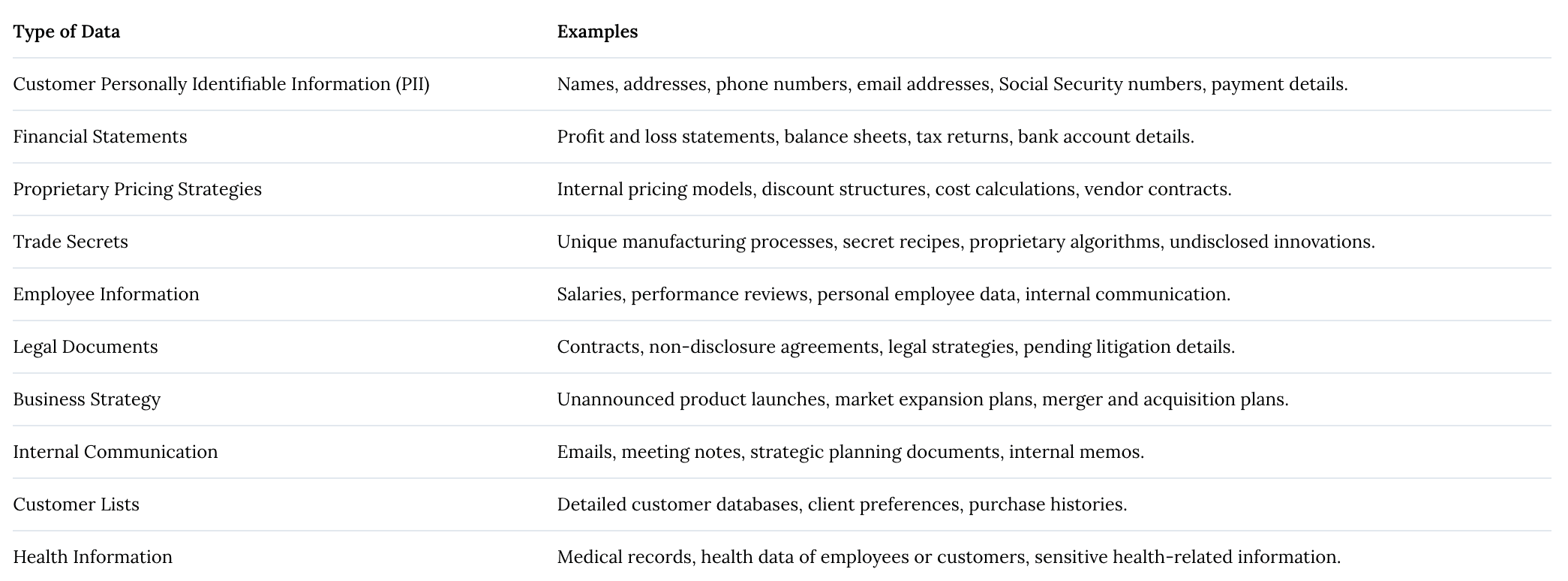
Consider what data you're sharing with AI tools. Many of the most popular platforms collect and use your inputs to train future models, often by default, with opt-outs buried in settings menus that most people never see. If you're pasting in customer information, financial records, proprietary strategies, or anything else you wouldn't want floating around in a dataset somewhere, this is a risk worth taking seriously. The tools themselves might work fine, but it's worth considering where that data goes after you hit send.
Keep Humans in the Loop
AI can draft emails, generate product descriptions, summarize meetings, and handle a lot of repetitive work. But it's not perfect. It misses nuance, it makes mistakes, it can produce outputs that sound polished but don't quite match your brand's voice, or worse, contain errors that damage your credibility if they go out unchecked. Automation is useful, but over-reliance without designated oversight is a liability.
Ultimately, ethical AI is about alignment. The tools you use should reflect your values and protect the people you serve to support the long-term trust you've worked to build. If a tool doesn't meet that standard, consider whether the efficiency gains are worth the trade-offs.
How AI Can Help Small Businesses
When used strategically, AI has the potential to transform how small businesses operate. Not in the disruptive sense, but in the practical, day-to-day sense of making limited resources go further and freeing up time for the work that actually requires human judgment.
Automating Repetitive Tasks
The most immediate applications target repetitive, time-consuming tasks. Scheduling meetings, organizing emails, transcribing conversations, summarizing long documents—these tasks don't require creativity or strategic thinking, but they eat up hours every week. AI handles them quickly and reliably. The U.S. Small Business Administration notes that AI-driven automation can improve operational efficiency in exactly these areas, helping business owners reclaim time that's better spent on growth, customer relationships, or product development.
Here are some AI tools and platforms that are good for task automation:
Calendly: Automates scheduling by integrating with calendars to find and book appointments.
Motion: AI-powered task and project management tool that automates workflows and scheduling.
Zapier: Connects different apps and automates workflows between them without coding.
IFTTT (If This Then That): Automates tasks between different apps and devices based on triggers.
Make (formerly Integromat): Visual platform for automating workflows between apps with advanced customization.
Tray.io: Low-code automation platform for integrating and automating complex workflows.
Airtable: Combines spreadsheets and databases with automation features for various tasks.
SmarterQueue: Social media automation tool for scheduling and managing posts across platforms.
Parsio: AI-powered tool for automating data extraction and processing from documents and emails.
Bardeen: Automates repetitive tasks in browsers and integrates with various apps and services.
Improving Decision-Making with Data
Beyond administrative work, AI can support better decision-making by analyzing your business data and surfacing patterns you might not notice manually. If you're tracking sales, customer behavior, inventory, or marketing performance, AI can identify trends, highlight anomalies, and help you make more informed decisions about where to focus your energy and budget. The Alan Turing Institute's research emphasizes that when AI is used to augment human decision-making rather than replace it, that combination of computational power and human context tends to produce the strongest outcomes.
Here are some specific examples of insights AI can surface:
Identifying which products sell better during certain seasons
Spotting customer churn patterns early
Predicting equipment failures before they happen
Detecting fraudulent transactions in real-time
Optimizing supply chain logistics for cost savings
Personalizing marketing campaigns based on individual customer behavior
Improving customer service by analyzing sentiment in support interactions
Forecasting demand for products or services to optimize inventory
Identifying high-value customers for targeted retention efforts
Streamlining recruitment by analyzing candidate data for better hiring decisions
Enhancing Marketing Efforts
Marketing is another area where AI delivers tangible value. Generating content for product descriptions, social media posts, email campaigns, and ad copy is faster with AI assistance, and many platforms now offer scheduling tools that automate posting across multiple channels. This doesn't mean you should let AI write everything without review, but it does mean you can produce more, test more ideas, and maintain a more consistent presence without hiring a full marketing team.
Here are some AI tools and platforms that are great for marketing:
Jasper: AI-powered content generation platform for blogs, ads, social media, and more.
Copy.ai: AI writing tool that creates marketing copy, blog posts, and email content.
Buffer: Social media scheduling and analytics tool with AI-assisted content suggestions.
Hootsuite: Social media management platform featuring AI-driven insights and recommendations.
Persado: AI-powered platform for optimizing marketing messages and subject lines.
LatelyAI: Uses AI to generate social media content from long-form assets.
MarketMuse: Content research and optimization tool leveraging AI for content strategy.
Surfer: AI-powered SEO tool for optimizing website and blog content.
AdCreative.ai: AI platform that generates high-performing ad creatives for marketing campaigns.
Emplifi: Customer engagement platform offering AI-driven social media and influencer analytics.
Improving Customer Experience
Customer service is evolving in similar ways. AI-powered chatbots can handle common questions, guide customers through orders, and provide instant responses outside of business hours, all of which improves the customer experience without requiring you to staff a 24/7 support line. The key is knowing where to draw the line. Chatbots work well for routine inquiries. Complex issues, complaints, or anything that requires empathy and judgment still need a human on the other end. The businesses that get this right use AI to handle volume, not to replace the personal touch that differentiates them from larger competitors.
Here are some AI tools and platforms that are good for customer interaction:
Intercom: Customer messaging platform offering live chat, bots, and automated workflows.
Drift: Conversational marketing and sales platform using chatbots for lead generation and customer engagement.
Tidio: All-in-one customer service platform combining live chat and AI-powered chatbots.
ManyChat: Chatbot builder specializing in marketing automation for Facebook Messenger, Instagram, and WhatsApp.
Chatfuel: Easy-to-use chatbot creator for Facebook Messenger and Instagram, designed for automating customer interactions.
Landbot: No-code chatbot platform focused on creating conversational experiences for websites and messaging apps.
Zoho SalesIQ: Live chat and chatbot solution with automation features, tailored for sales and support teams.
MobileMonkey: Omnichannel chatbot platform ideal for marketing, lead capture, and FAQs on web and messaging apps.
When these capabilities are used thoughtfully, they give small businesses a meaningful edge. The caveat is that none of it works if the tools you're using undermine trust, expose sensitive data, or produce outputs that don't align with your brand. That's where intentionality comes back into the picture.
How to Start Using AI Responsibly
Getting started with AI doesn't require overhauling your entire workflow or signing up for every tool that promises to revolutionize your business. The opposite approach tends to work better: start small, learn what works, and expand gradually as you build confidence in how these tools fit into your operations.
Start with One Use Case
Begin by identifying one practical use case to focus on. This could be generating first drafts of blog posts or product descriptions, automating meeting summaries, organizing your inbox, or using a chatbot to handle FAQs on your website. Choose something specific and measurable so you can evaluate whether the tool is actually saving time or improving quality. Trying to do everything at once usually means doing nothing particularly well.
Always Review AI Outputs
Every output from an AI tool should be reviewed by someone who understands your business, your customers, and your brand voice. AI makes mistakes. It hallucinates facts. It produces sentences that sound confident but are subtly wrong. It misses tone. If you're publishing AI-generated content, sending it to customers, or using it to inform decisions, someone needs to catch those errors before they become problems. The U.S. Small Business Administration's guidance on AI adoption emphasizes this point clearly: automation should enhance human judgment, not replace it.
Be Transparent About AI Use
If you're using AI to interact with customers, whether that's through a chatbot, automated emails, or generated content, let them know. This doesn't mean you need to plaster disclaimers everywhere, but it does mean being honest when asked, and making sure customers understand when they're talking to a bot versus a person. Research shows that transparency around AI use often strengthens trust rather than weakening it, especially when it's framed as a way to provide faster, more responsive service.
Protect Sensitive Information
Be mindful of what information you're sharing with AI tools. If you're using a platform that collects and trains on user data (and many of the most popular ones do), avoid entering anything sensitive: customer information, proprietary business strategies, financial records, anything you wouldn't want potentially accessible to competitors or third parties down the line. This is especially important if you're using free or low-cost AI tools, where data collection is often part of the business model.
If privacy is a serious concern, consider using platforms that prioritize data security and local storage over cloud-based collection. That's where tools like Weave come into the picture. Weave is built around the idea that your business data should stay yours. Conversations and documents are stored locally on your device, not uploaded to external servers or fed into training datasets. When you do use cloud AI models through Weave (Google, Anthropic, or OpenAI), your identity isn't shared with those providers, which is meaningfully safer than interacting with them directly. And if you want maximum privacy, you can disable cloud providers entirely and run AI models locally on your own hardware, with zero internet connectivity required. For small businesses handling sensitive client information or proprietary work, that kind of control matters.
The Alan Turing Institute's research on AI governance emphasizes that AI systems should be "worthy of public trust" by prioritizing accuracy, transparency, and accountability. For small businesses, that principle translates directly into practice. You're not just adopting tools. You're integrating them into relationships and processes that you've spent years building. The tools you choose need to meet a higher standard than just "it works" or "it's cheap." They need to align with how you want to do business.
Moving Forward with AI
The opportunity AI presents for small businesses is real, and so are the risks. Success depends on a deliberate approach: adopting AI carefully, choosing your tools wisely, and never losing sight of the responsibility you have to protect the trust you’ve worked hard to earn. Start small, stay intentional, keep people at the center, be transparent, safeguard sensitive data, and use solutions that reflect your values, not just your budget.
If you want to get the benefits of AI without sacrificing privacy or control, consider Weave. Perfect for small businesses, Weave is a local-first, private AI platform designed to keep your data secure, your operations efficient, and your relationships intact. With Weave, AI is a tool that works for you, and for the values your business stands for.
Sources
Leslie, D. (2019). Understanding artificial intelligence ethics and safety: A guide for the responsible design and implementation of AI systems in the public sector. The Alan Turing Institute. https://www.turing.ac.uk/sites/default/files/2019-06/understanding_artificial_intelligence_ethics_and_safety.pdf
U.S. Small Business Administration. (2024). AI for small business. SBA.gov. https://www.sba.gov/business-guide/manage-your-business/ai-small-business